Epoxy Floors in Riverside, CA

Notes on epoxy flooring in Riverside, CA: how slabs are prepared, which finishes suit garages, gyms and utility rooms, and how a coating ages in inland heat.

What We Cover

Epoxy Floors in Riverside, CA

Epoxy floors in Riverside, CA start with the concrete, and the concrete here is rarely uniform. Slabs poured decades ago near the Mission Inn sit beside newer pours in Jurupa Valley, and each takes a coating differently. A crew reads the slab first: how much oil it holds, whether vapor rises through it, and how many cracks need filling before anything is rolled out.

How the work is done

The process is grinding, repair, primer, base coat and topcoat, in that order. Diamond grinding opens the surface so the primer can bond. Cracks and joints are filled and flushed level. A base coat of epoxy resin goes down next, often with vinyl flake or quartz sand broadcast into it while wet, and a urethane or polyaspartic topcoat seals the floor.

Beyond the garage

Garage floors are only part of the picture. Home gyms, workshops, laundry rooms and utility rooms all take a coating, and each asks something different of it. A gym needs impact resistance, a shop needs resistance to wheels and chemicals, and a laundry room needs a waterproof edge where the floor meets the wall.

Heat, wind and timing

Riverside County summers shape the schedule. Slabs warm quickly after mid-morning, which shortens the working time of resin and hardener, so pours start early. Santa Ana winds carry dust into open garages, and a clear coat needs still, clean air while it levels. Cure time and pot life are watched closely for those reasons, and a floor is kept free of foot traffic until the topcoat has hardened through.

Guides

The pages here cover finishes, slip resistance, moisture in older slabs, and what to do with a coating that has started to peel. Each one answers a single question a homeowner in the Inland Empire tends to ask before a floor gets coated.

Latest Guides

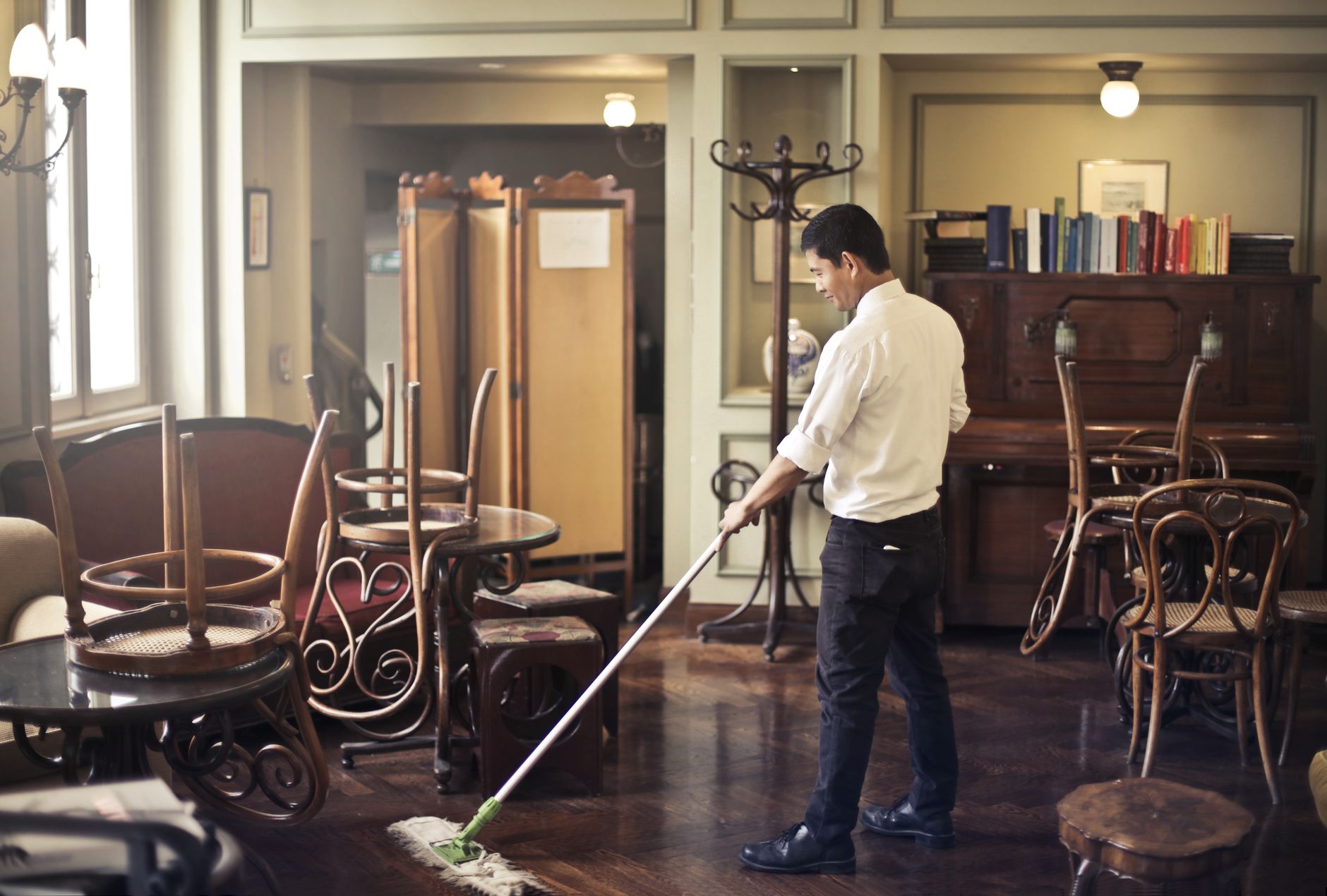
Worker in uniform cleaning a floor with a mop

How Often Should a Coated Garage Floor Be Cleaned and With What

2026-10-20

A coated floor stays good-looking when the grit comes off it before the grit is walked into it. Dust, tire residue and soap film do more harm to a topcoat than any single spill, and in Riverside, CA the dust never really stops. Dry summers, Santa Ana wind days and irrigation overspray all deposit something on a garage or shop floor, and each deposit calls for a slightly different response. Nothing on this list needs special equipment. It needs a routine, a soft head on the mop, and a bit of attention to what is actually sitting on the surface.

How often should an epoxy floor be cleaned?

An epoxy floor should be swept or dust-mopped every week and damp-mopped every month. Weekly sweeping removes the abrasive particles before shoes and tires grind them into the topcoat. The monthly mop picks up the film that sweeping leaves behind, such as dried drips of oil, spray from the street and tracked-in clay. A floor that sees a car every day, or a workshop where someone works most evenings, benefits from a second mop mid-month.

The cleaning solution matters less than the pad. A microfiber head or a soft nylon pad cleans a gloss topcoat without scratching it. Stiff bristle brushes and rough scrub pads leave fine swirl marks that catch the light and make a new floor look old within a season.

What cleaners are safe on a coated slab?

The safe cleaners are plain warm water, a few drops of dish soap, and a mild pH-neutral floor cleaner. Each of these lifts dirt without dissolving the film. Harsh degreasers, ammonia-heavy glass cleaners and citrus-based solvents can soften a urethane or polyaspartic topcoat if they sit for more than a few minutes, and the dull patch that results does not come back.

  • Warm water and a little dish soap suit everyday grime and the monthly mop.
  • A pH-neutral cleaner suits floors with a satin or matte finish, where soap residue shows as haze.
  • A diluted degreaser belongs only on oil spots, and it should be rinsed off completely.
  • Bleach and acid-based cleaners should stay off the floor, since they attack the resin at the surface.

Whatever is used, a final rinse with clean water and a dry towel pass keeps film from drying into streaks. Standing water in a low spot is worth sponging up, particularly under a floor drain lip.

How is each stain handled?

Each stain has a different cause and a different fix, and the table below lines up the common ones found on garage and workshop floors.

StainWhat it usually isWhat works
Dark ring under a tireTire residue and road oilWarm soapy water and a soft pad, then rinse
Rust-colored markA steel can or jack stand that sat dampLift the item, wipe with a mild cleaner, dry the area
White chalky ringHard water from a leak or hoseVinegar diluted well in water, wiped fast and rinsed
Oil patchMotor oil or hydraulic fluidAbsorbent granules first, then a diluted degreaser
Yellow castSunlight on the resin near a window or doorCannot be cleaned off; a clear coat renews it

Speed beats strength with nearly every stain. A spill wiped within the hour almost never marks a cured floor, and a spill left for a week often needs the topcoat refreshed over that area.

What does a Riverside summer do to the surface?

A Riverside summer bakes dust onto the coating and makes the surface hot enough to soften any rubber that rests on it. Garages across Riverside County can climb well past outdoor temperature by late afternoon, and a warm topcoat is a softer topcoat. Tires that sit still on it all day can transfer rubber and leave a ghost of the footprint. A mid-summer damp mop clears the film, and parking in a different spot now and then spreads the heat load around.

The same heat dries wet spills quickly, which sounds helpful and is not. A puddle of cleaner that dries on the floor leaves a ring of its own residue. Mopping in the cooler part of the day, and rinsing before anything has the chance to dry, avoids that.

How should wind dust and irrigation spray be handled?

Wind dust is handled with a doormat at the entry and a dry sweep before any wet cleaning, and irrigation spray is handled by wiping the threshold after sprinklers run. Santa Ana days push fine silt through gaps in a garage door, and that silt acts like sandpaper under a sole. Wetting it first turns it into mud that dries into a dull film. Sweeping first removes most of it in a minute. Sprinkler overspray near the door carries minerals, so the strip just inside the opening shows white spots sooner than the rest of the room.

Tools matter here as well. A wide microfiber flat mop covers a two-car floor in a few minutes and holds enough water to rinse as it goes, while a string mop pushes dirty water into the low spots. A dry dust mop between wet cleans picks up pet hair and fine silt, and it takes less effort than a vacuum, which can drag a hard wheel across the film.

What about a floor that has gone dull?

A dull floor usually has a thin film of cleaner or hard water on top of a topcoat that is still sound. A deep clean with a neutral cleaner and two clear-water rinses brings a fair amount of the shine back. When that does not work, the gloss has worn away from the surface itself, mostly along the main walking path. A light scuff with a fine pad and a fresh clear coat restores it without touching the base.

When is it time to call for a recoat?

A recoat is due when cleaning no longer brings back the shine, when scratches show white, or when the surface feels rough in a path where it used to feel smooth. In heavy-use garages that point tends to arrive after several years. A flake floor shows it first as a loss of depth in the clear layer over the chips. A solid color floor shows it as a dull patch where tires turn. Catching the wear while the base coat is still sealed means the fix is a topcoat rather than a grind.

Does the finish change the routine?

The finish changes the tools more than the schedule. Flake needs a soft pad because the chips stand slightly proud and a stiff brush can dull the clear layer. Metallic floors show swirl marks from grit under a mop head, so they get swept more closely. Solid color floors show every tire print, so they get the monthly mop on time. A gloss floor shows dust the day after it is cleaned, while a satin floor hides it for a week.

What does a good habit look like in practice?

A good habit is a broom within reach of the door and a mop that lives in the same corner every time. People who keep a cheap push broom hanging by the entry sweep the floor twice as often as people who keep it in a closet. A doormat takes most of the dirt off a boot. A small rack of absorbent granules near the car catches a drip before it spreads. Nothing about this is hard, and the floor rewards it for years. Floors near the Santa Ana River corridor, where mornings carry moisture and evenings carry dust, benefit most from that rhythm, since the two together make a gritty paste that a quick sweep would have prevented.

Clean what sits on the surface early, use soft pads, and renew the topcoat before the base coat is exposed.
Read more →

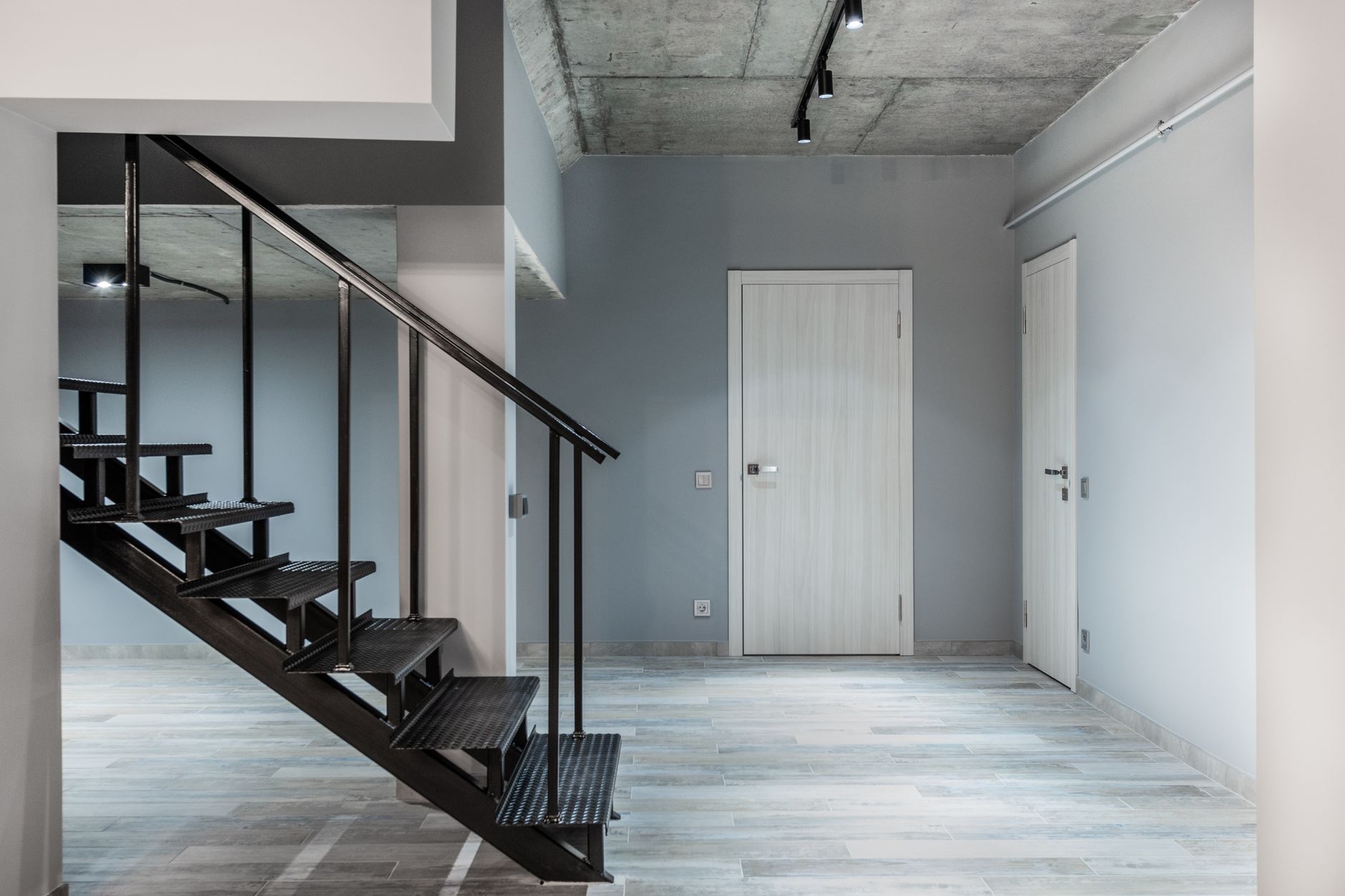
Black stairway and hallway with a smooth floor in a bright home

What Has to Happen Before a Floor Coating Goes Down

2026-10-20

A room is ready for a coating when it is empty, dry, clean down to the bare concrete and warm enough for the resin to cure. Most of the work on the day looks like cleaning and grinding rather than painting, and most of the surprises come from what was under the old stored boxes. In Riverside, CA the calendar and the weather add a few wrinkles of their own. The questions below are the ones that come up before a utility room, workshop or home gym floor gets coated.

How long does a floor coating job take?

A typical residential floor takes two to three days from the first grinder pass to a floor that can be walked on. The first day covers grinding, crack repair and the primer. The second day covers the base coat and the flake or color. The third day is the topcoat. Foot traffic is usually fine after a day to a day and a half, while heavy items such as tool chests and gym racks wait about a week, sometimes longer in cool weather.

Polyaspartic systems compress the schedule, since they cure in hours rather than a day. That can fit a whole job into a single long day, and it also leaves less time to fix a mistake while the material is wet.

What has to leave the room first?

Everything on the floor has to leave the room, including shelving, the water heater cover if it can be moved, and any items stored in the corners. A crew can grind around a fixed appliance, but the coating then stops short of it and leaves a bare edge. Stored paint cans and chemical containers should be moved out of the area entirely, since solvent fumes and resin do not mix well in a closed space.

Wall hangings, bikes and ladders also come off the walls. Grinder dust rises higher than most people expect, and a cabinet left in place collects a fine layer that is hard to clean.

Does the slab need a moisture test before anything else?

Yes, a moisture test comes before anything else because a coating over a damp slab fails slowly and visibly. A plastic sheet taped to the floor for a day shows fogging when vapor rises. A calcium chloride kit gives a number over several days. Older neighborhoods around Fairmount Park and Riverside's downtown streets often have slabs poured without a vapor barrier, so the test is not a formality there.

If vapor is moving through, the fix is a moisture-blocking primer. It adds a day to the schedule and prevents the blisters that otherwise show up around the first heavy rain.

Stains are the usual wildcard. Old oil that has soaked deep into the concrete can push back up through new material, so heavily stained spots may need a deeper grind or an oil-tolerant primer. A crew will pour a few drops of water on the slab to see if they bead, which tells them how much oil is lurking beneath the surface before a single drop of resin is mixed.

What does grinding actually do?

Grinding removes the thin, weak top layer of the concrete and opens its pores so the primer can grip. A diamond grinder with a vacuum attached takes off old paint, sealer, laitance and surface stains. The slab ends up with a texture like fine sandpaper, which is the profile the resin needs. A shot blast machine can give a similar result on large areas or on slabs with heavy contamination.

Acid etching, once common, is much less reliable. It leaves residue in the pores, it is hard to neutralize fully, and it rarely produces an even profile. Mechanical prep is what holds a coating on for years.

How are cracks and joints handled?

Cracks are widened slightly, cleaned and filled with a rigid epoxy or polyurea filler, then ground flush. Saw-cut joints that move are filled with a flexible joint filler so the new film does not tear along them. A hairline crack that has never moved is treated as cosmetic, while a crack with one edge higher than the other points to a slab that is still shifting and needs a different repair.

What temperature does the room need?

The slab and the air should sit within the range printed on the product data sheet, usually from the fifties up to the nineties in degrees Fahrenheit. Riverside summers push past the upper end by early afternoon, so inland crews start early and finish the base coat before the slab warms up. A pot life of twenty minutes can shrink to ten on a hot slab, and a mixed bucket left sitting begins to gel.

In winter the problem flips. A cold slab slows the cure and can leave a tacky topcoat for days. Opening the garage door at night for a cold snap undoes a day of work.

Can the flake or color be changed once it is down?

The flake or color cannot be changed without grinding it off, so the decision is made before the primer goes down. A sample board viewed under the same light as the room helps. Garage lighting looks different from daylight, and a gray that looks warm in the showroom can read blue under cool LED tubes. Looking at the sample near the garage door at the hour the room is used most is a simple, free check.

What should be checked when the job is finished?

The finished floor should be checked in raking light for missed spots, roller marks and bare edges. Standing at the doorway and looking along the floor with the sun low shows pinholes, dry spots and uneven flake that are invisible from above. The edge along the wall deserves a close look, since that is where coating tends to stop short. Anything found can be touched up the same day while the material is still workable.

How soon can a car or heavy equipment return?

A car can usually return after about three days in warm weather, though a week is safer for the first hot-tire parking. Heavy equipment such as a workshop table saw, a gym rack or a rolling tool chest should wait about a week, with felt pads under legs. Moving items back with sliding drags a bare edge across the film and scratches the surface before it has finished hardening.

Ventilation matters as well. Resin and hardener give off a strong smell while they cure, and a garage with the door cracked open or a fan in the window handles it, while a closed utility room needs a fan moving air out for a day. Pets and children stay out of the area until the odor has gone, which is usually the following morning.

Is there anything that should not be done afterward?

Harsh chemicals, dragging items across the surface and leaving wet rubber mats on the film are the usual mistakes in the first month. The coating continues to harden for weeks after it feels dry. Light foot traffic and gentle cleaning are fine. A good first-month habit is a dry sweep and a damp mop with plain water, and nothing stronger.

Clear the room, test the slab, grind it, and start the coating when the temperature is right.

Read more →