What Has to Happen Before a Floor Coating Goes Down
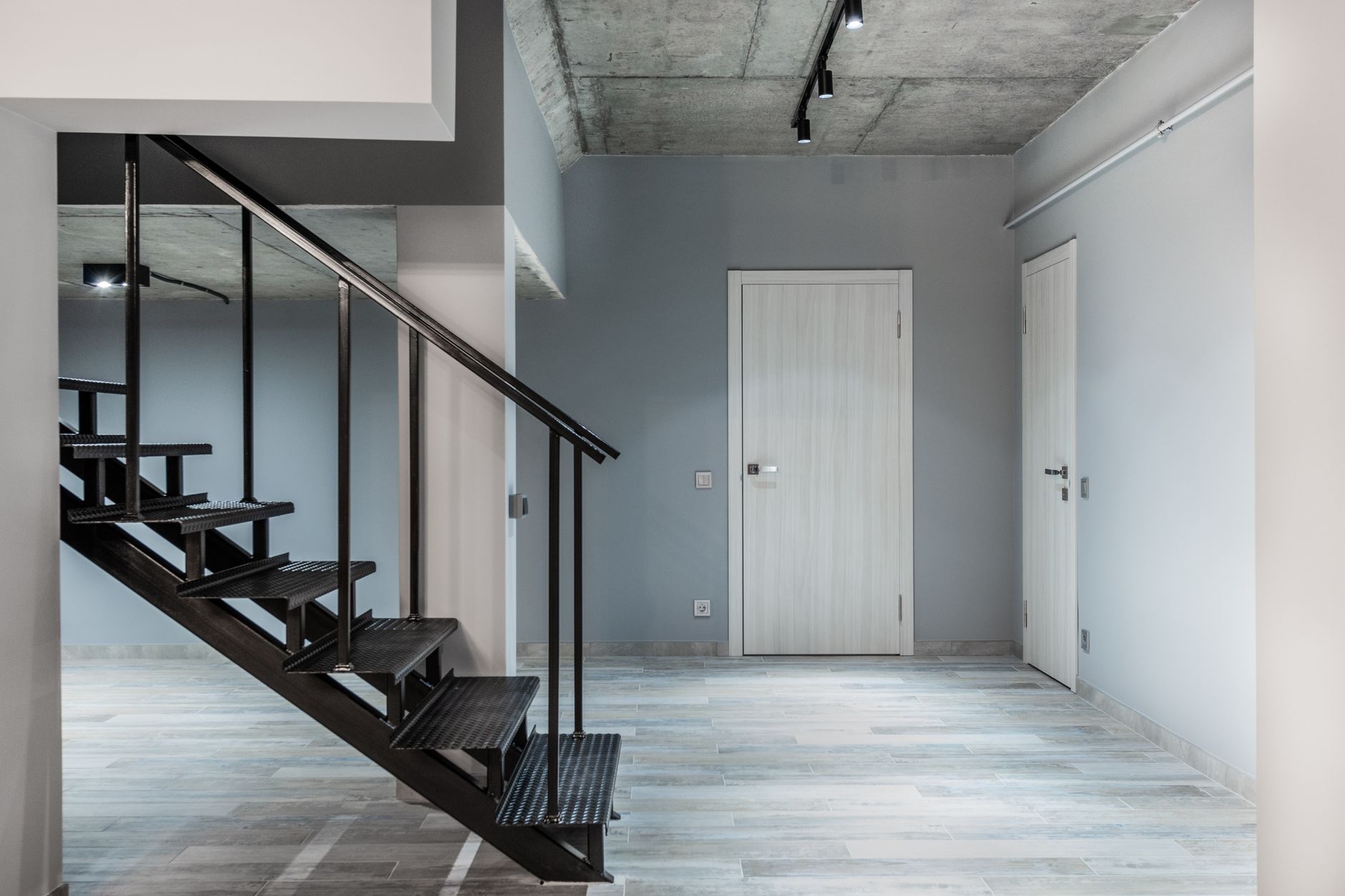
A room is ready for a coating when it is empty, dry, clean down to the bare concrete and warm enough for the resin to cure. Most of the work on the day looks like cleaning and grinding rather than painting, and most of the surprises come from what was under the old stored boxes. In Riverside, CA the calendar and the weather add a few wrinkles of their own. The questions below are the ones that come up before a utility room, workshop or home gym floor gets coated.
How long does a floor coating job take?
A typical residential floor takes two to three days from the first grinder pass to a floor that can be walked on. The first day covers grinding, crack repair and the primer. The second day covers the base coat and the flake or color. The third day is the topcoat. Foot traffic is usually fine after a day to a day and a half, while heavy items such as tool chests and gym racks wait about a week, sometimes longer in cool weather.
Polyaspartic systems compress the schedule, since they cure in hours rather than a day. That can fit a whole job into a single long day, and it also leaves less time to fix a mistake while the material is wet.
What has to leave the room first?
Everything on the floor has to leave the room, including shelving, the water heater cover if it can be moved, and any items stored in the corners. A crew can grind around a fixed appliance, but the coating then stops short of it and leaves a bare edge. Stored paint cans and chemical containers should be moved out of the area entirely, since solvent fumes and resin do not mix well in a closed space.
Wall hangings, bikes and ladders also come off the walls. Grinder dust rises higher than most people expect, and a cabinet left in place collects a fine layer that is hard to clean.
Does the slab need a moisture test before anything else?
Yes, a moisture test comes before anything else because a coating over a damp slab fails slowly and visibly. A plastic sheet taped to the floor for a day shows fogging when vapor rises. A calcium chloride kit gives a number over several days. Older neighborhoods around Fairmount Park and Riverside's downtown streets often have slabs poured without a vapor barrier, so the test is not a formality there.
If vapor is moving through, the fix is a moisture-blocking primer. It adds a day to the schedule and prevents the blisters that otherwise show up around the first heavy rain.
Stains are the usual wildcard. Old oil that has soaked deep into the concrete can push back up through new material, so heavily stained spots may need a deeper grind or an oil-tolerant primer. A crew will pour a few drops of water on the slab to see if they bead, which tells them how much oil is lurking beneath the surface before a single drop of resin is mixed.
What does grinding actually do?
Grinding removes the thin, weak top layer of the concrete and opens its pores so the primer can grip. A diamond grinder with a vacuum attached takes off old paint, sealer, laitance and surface stains. The slab ends up with a texture like fine sandpaper, which is the profile the resin needs. A shot blast machine can give a similar result on large areas or on slabs with heavy contamination.
Acid etching, once common, is much less reliable. It leaves residue in the pores, it is hard to neutralize fully, and it rarely produces an even profile. Mechanical prep is what holds a coating on for years.
How are cracks and joints handled?
Cracks are widened slightly, cleaned and filled with a rigid epoxy or polyurea filler, then ground flush. Saw-cut joints that move are filled with a flexible joint filler so the new film does not tear along them. A hairline crack that has never moved is treated as cosmetic, while a crack with one edge higher than the other points to a slab that is still shifting and needs a different repair.
What temperature does the room need?
The slab and the air should sit within the range printed on the product data sheet, usually from the fifties up to the nineties in degrees Fahrenheit. Riverside summers push past the upper end by early afternoon, so inland crews start early and finish the base coat before the slab warms up. A pot life of twenty minutes can shrink to ten on a hot slab, and a mixed bucket left sitting begins to gel.
In winter the problem flips. A cold slab slows the cure and can leave a tacky topcoat for days. Opening the garage door at night for a cold snap undoes a day of work.
Can the flake or color be changed once it is down?
The flake or color cannot be changed without grinding it off, so the decision is made before the primer goes down. A sample board viewed under the same light as the room helps. Garage lighting looks different from daylight, and a gray that looks warm in the showroom can read blue under cool LED tubes. Looking at the sample near the garage door at the hour the room is used most is a simple, free check.
What should be checked when the job is finished?
The finished floor should be checked in raking light for missed spots, roller marks and bare edges. Standing at the doorway and looking along the floor with the sun low shows pinholes, dry spots and uneven flake that are invisible from above. The edge along the wall deserves a close look, since that is where coating tends to stop short. Anything found can be touched up the same day while the material is still workable.
How soon can a car or heavy equipment return?
A car can usually return after about three days in warm weather, though a week is safer for the first hot-tire parking. Heavy equipment such as a workshop table saw, a gym rack or a rolling tool chest should wait about a week, with felt pads under legs. Moving items back with sliding drags a bare edge across the film and scratches the surface before it has finished hardening.
Ventilation matters as well. Resin and hardener give off a strong smell while they cure, and a garage with the door cracked open or a fan in the window handles it, while a closed utility room needs a fan moving air out for a day. Pets and children stay out of the area until the odor has gone, which is usually the following morning.
Is there anything that should not be done afterward?
Harsh chemicals, dragging items across the surface and leaving wet rubber mats on the film are the usual mistakes in the first month. The coating continues to harden for weeks after it feels dry. Light foot traffic and gentle cleaning are fine. A good first-month habit is a dry sweep and a damp mop with plain water, and nothing stronger.
Clear the room, test the slab, grind it, and start the coating when the temperature is right.